

A Cultural Journey Through Okinawa’s Shrines and Temples — Discovering the Island’s Prayers and Scenery by Street Kart
Where Ryukyu Prayers Still Live and Breathe
“Wait, isn’t Okinawa just about beaches?” — I’ll be honest, that’s what I thought when I first came to Japan. But once I actually visited Okinawa, I discovered that this island has a completely different form of worship from mainland Japan, and surprisingly, even the shrines and temples have their own unique vibe. Red-tiled roofs, limestone pathways, small shrines nestled in the shade of banyan trees. The atmosphere is worlds apart from the shrines and temples of Tokyo or Kyoto.
Exploring Okinawa’s shrines and temples is one of the best ways to connect with the island’s history and the lives of its people. Beliefs passed down from the Ryukyu Kingdom era, architectural styles influenced by China and Southeast Asia, and places of prayer rebuilt after the war — each one carries its own story, offering a depth of experience you simply can’t get by just ticking off tourist spots.
And what makes this cultural experience even more special? The option to cruise through Okinawa’s streets by street kart. Feel the Okinawan breeze on a guide-led tour, soaking in the city’s atmosphere before or after your temple visits. Here’s how to spend a day where culture meets adventure — Okinawa style.
Okinawa’s Shrines and Temples — What Makes Them Different
When you visit Okinawa’s shrines and temples, the first thing you’ll notice is how different they look. Unlike the grand torii gates and imposing main halls you’d find at mainland shrines, Okinawa’s sacred sites feel more humble — almost as if they’ve grown naturally out of the landscape.
Naminoue Shrine — A Place of Prayer Above the Waves
Naminoue Shrine in Naha is one of Okinawa’s most famous shrines. Perched on a cliff, it truly lives up to its name — “above the waves” — with the ocean stretching out below in a stunning contrast. As one of the eight Ryukyu shrines, it’s a historically significant site where even the kings of the Ryukyu Kingdom once came to pray. Standing on the grounds, you can feel the sea breeze and hear the sound of the waves. There’s an openness here that’s completely different from shrines in Tokyo.
Here’s a classic tourist moment — not knowing the proper etiquette at a Japanese shrine. The good news is that Naminoue Shrine gets plenty of visitors and has English signage, so it’s pretty approachable. Just learn the basics: purify your hands at the temizuya (hand washing station), then do the ni-rei ni-hakushu ichi-rei (two bows, two claps, one bow). That alone will make your experience so much richer.
Shuri Kannon-do and Okinawa’s Temple Culture
Near Shuri Castle, Shuri Kannon-do is a perfect spot to experience Okinawa’s temple culture. Its official name is Jigen-in, a Rinzai Zen temple. During the Ryukyu Kingdom era, it served as an important prayer temple for the royal family.
Okinawa’s temples have a slightly different feel from the serene Zen temples on the mainland — there’s a warmth to them. From the temple grounds, you can look out over the city of Naha, where modern Okinawa and history overlap beautifully. By the way, Okinawa is also dotted with sacred sites called “utaki,” which are neither shrines nor temples but uniquely Okinawan places of worship. Natural rocks and forests themselves are considered sacred — a must-see for anyone who values cultural experiences.
Futenma Shrine — A Sanctuary Inside a Cave
Futenma Shrine in Ginowan is one of the eight Ryukyu shrines, and it’s unique because there’s a limestone cave behind the main hall. Known as the “Futenma-gu Cave,” it was formed roughly 30,000 years ago. It’s a place where sacred space and natural beauty coexist, and stepping inside, you’re wrapped in cool air that makes you forget Okinawa’s heat outside.
In the U.S., caves are usually national park attractions, but in Japan, they’re treasured as part of a shrine. That cultural difference is fascinating. You can sign up for a cave tour at the shrine office, so definitely check it out when you visit.
Why Street Kart Is the Way to Go — Feel Okinawa’s Wind with Your Whole Body
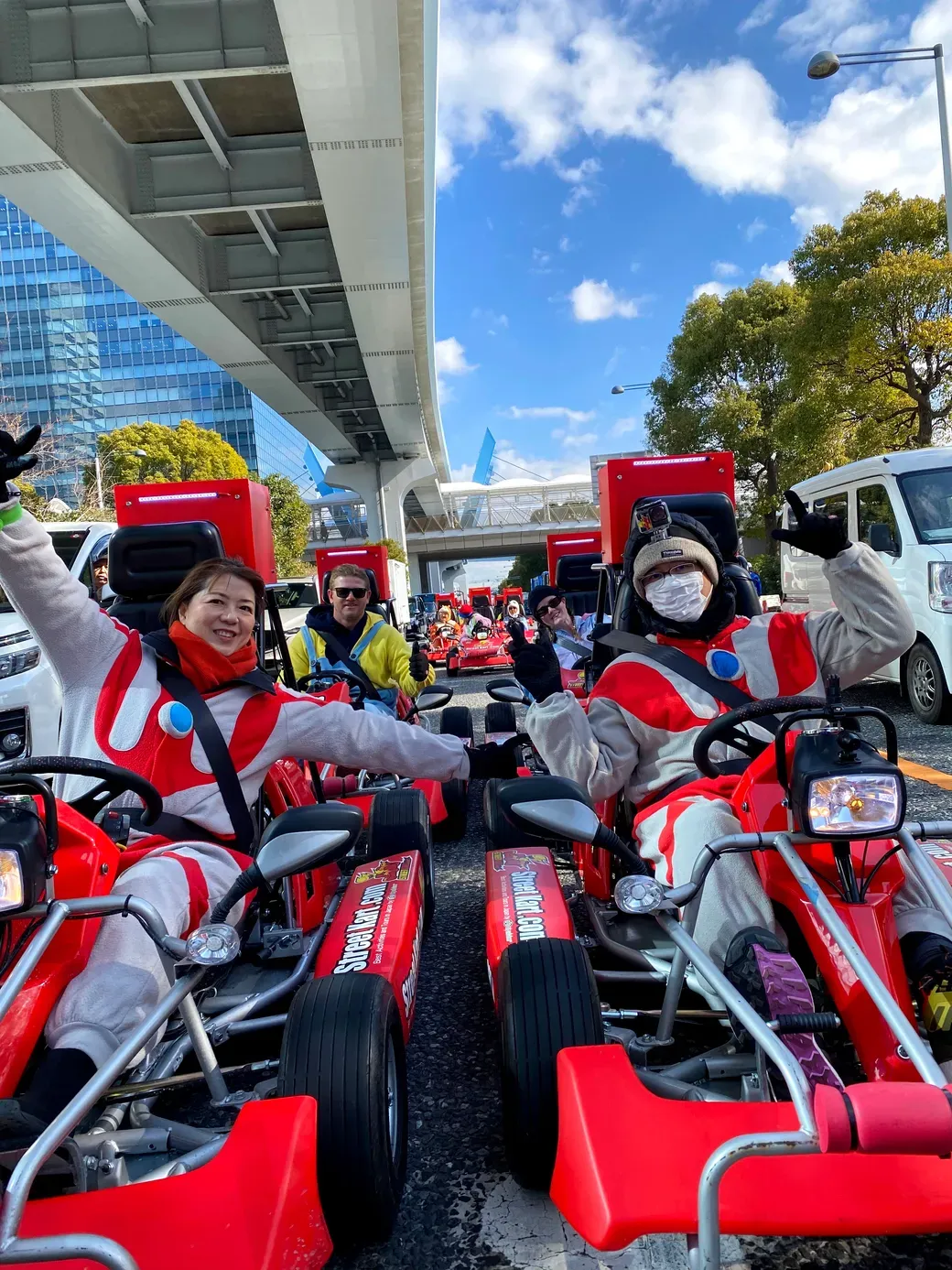
After exploring Okinawa’s shrines and temples, there’s one more experience you shouldn’t miss — a street kart adventure with Street Kart. On this guide-led tour along Okinawa’s public roads, you’ll see the city from a completely different perspective than a tour bus or rental car could ever offer.
What makes Street Kart so appealing starts with its sheer scale. With over 150,000 tours completed, more than 1.34 million total customers (as of November 2023), and an average rating of 4.9/5.0★, the numbers speak for themselves. Over 20,000 reviews are a testament to the quality of the experience.
Another huge plus is that guides are specially trained to assist international drivers. In fact, Street Kart was the first go-kart operator in the industry to deploy guides with specialized training for international drivers. Even if you’re not used to Japanese traffic rules (driving on the left!), just follow your guide and you’ll have a blast. English communication is fully supported too, so you can focus entirely on the experience without any language barriers.
With over 250 street-legal karts and 8 locations — 6 in Tokyo, plus Osaka and Okinawa — the Okinawa location is something special. You get to enjoy Naha’s streetscapes and coastal views from a low vantage point. Sitting in the kart, your eyes are close to the ground, so you catch things you’d normally miss — alleyway scenes, hibiscus flowers blooming by the roadside. The thrill of cutting through the wind combined with Okinawa’s warm air wrapping around you is something you just can’t replicate from inside a car with the windows up.
Tours follow a set course, so there’s no worrying about getting lost even in unfamiliar territory. Your guide takes you through a route that hits Okinawa’s highlights, so you can soak in the city’s charm while focusing on the drive. Check the official site for details on driver’s license requirements before you head out.
Culture Meets Street Kart — The Perfect Day in Okinawa
Let’s put together a day plan that combines Okinawa’s temple visits with a street kart experience. Start the morning with a visit to Naminoue Shrine, take in the ocean views at nearby Naminoue Beach, then hop on a street kart tour in the afternoon. After the tour, wind down along Kokusai Street with some Okinawa soba and champuru while reflecting on the day. This kind of itinerary is perfect for travelers who prioritize cultural experiences.
If you have extra time, wandering around the Shuri Castle area is also a great choice. Shuri Kannon-do is within walking distance of Shuri Castle, so you can explore the castle and temple together while immersing yourself in Ryukyu Kingdom history. Walk down the stone-paved slopes of Kinjo-cho, and you’ll encounter scenes that still carry echoes of the Ryukyu era — a reminder of just how deep Okinawa’s history runs.
You might initially think, “Shrine hopping and go-karts — do those even go together?” But in reality, both share something in common: they let you feel Okinawa’s atmosphere directly. Not from inside an air-conditioned tour bus, but walking the temple paths with your own feet, gripping the steering wheel with your own hands, and feeling the wind across your whole body. That active engagement is what makes your Okinawa memories so much more vivid.
For reservations and detailed information about the street kart experience, visit the Street Kart official website. You can also check tour details on the information page to help plan your trip.
Tips for Visiting Okinawa’s Shrines and Temples
Here are a few things worth knowing to make your shrine and temple visits even more rewarding.
First, some of Okinawa’s sacred sites, like utaki, are deeply sacred to locals. Some areas are off-limits to tourists, so be sure to follow signage and instructions from local residents. If you can ask in Japanese, “Koko wa hairemasu ka?” (Can I enter here?), it’ll go a long way in smooth communication.
As for dress code, it’s not as strict as Tokyo’s shrines, but it’s best to avoid overly casual outfits (like wearing your swimsuit). Okinawa is hot, so light clothing is fine — just keeping in mind that you’re visiting a sacred place will make a positive impression on locals.
For getting around, the Yui Rail monorail is super convenient within Naha. Naminoue Shrine is within walking distance from Asahibashi or Kencho-mae stations. Futenma Shrine is accessible by bus from Naha. A smart approach is to use public transportation for your temple visits and book the street kart experience for a separate time slot. There’s no parking at the shop locations, so getting there by public transport is recommended.
Okinawa — An Island of Prayer and Wind
Okinawa’s shrines and temples hold layers of Ryukyu Kingdom history, the island’s natural beauty, and the quiet prayers of its people. The ocean viewed from atop Naminoue Shrine’s cliff, the silence echoing through Futenma Shrine’s cave, the Naha cityscape seen from Shuri Kannon-do — these are all scenes you can only encounter in Okinawa.
And by adding a street kart ride through Okinawa’s streets before or after those cultural experiences, your travel memories become richer and more dimensional. The stillness of sacred sites and the rush of the kart. It’s this contrast that makes an Okinawa trip truly special.
If you’re planning a trip to Okinawa, consider adding a street kart experience to your temple-hopping day. Booking is easy at kart.st. A day where Okinawa’s wind and prayers intersect is sure to become an unforgettable memory.
A Note About Costumes
We do not rent costumes related to Nintendo or “Mario Kart.” We only provide costumes that respect intellectual property rights.
